


<厭食與暴食 – 心理與生理>
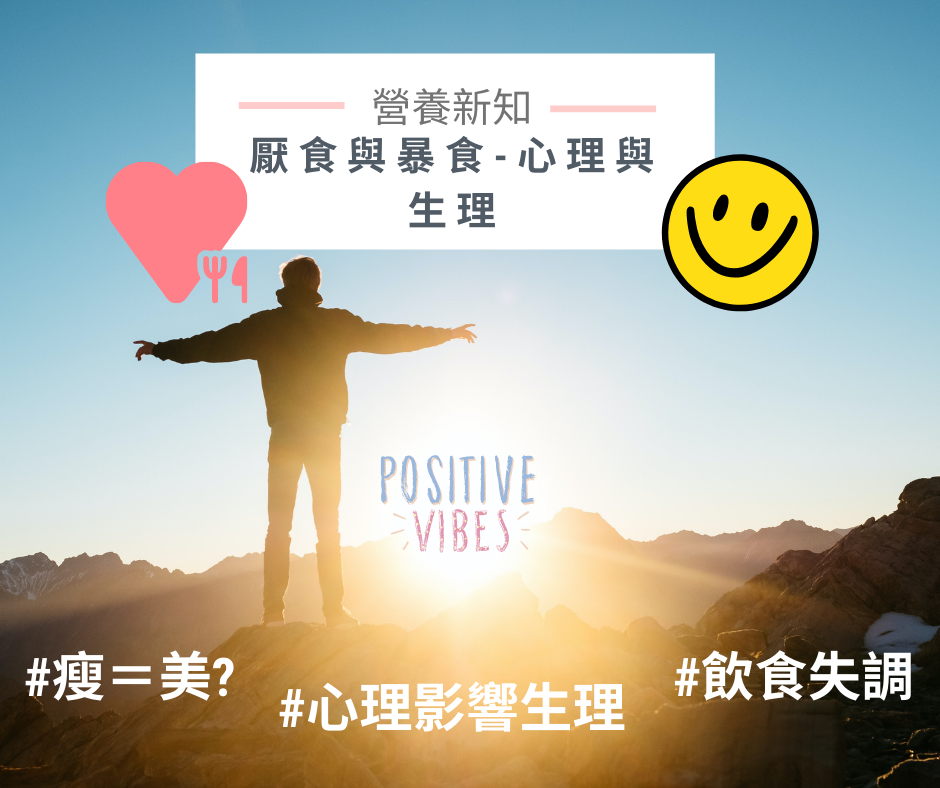
厭食症(Anorexia nervosa)和暴食症(Bulimia nervosa)是兩種複雜的飲食失調,常源於對美態的追求及社會壓力,嚴重影響個體的心理與生理健康。厭食症患者會因極端節食導致營養不良、女性停經及骨質疏鬆等生理併發症,而暴食症患者則陷入暴食後催吐或濫用瀉藥的循環,引致脫水、電解質失衡及牙齒琺瑯質受損。Nutrition Point 指出,這兩種飲食失調不僅對生理造成損害,心理層面亦受重創,因此患者需要醫生、營養師及心理醫生的整合性治療。
我相信不少香港人對「食神」一戲中,透過「瀨尿牛丸」將厭食症病人治好的一幕有印象吧。但現實中,厭食症(Anorexia nervosa)和暴食症(Bulimia nervosa)不但沒有那樣簡單,甚至還需要經歷一段漫長的康復路程。而正值花樣年華的你們又有否想過在追求美態的同時已經不自覺地墮入厭食或暴食症的陷阱呢?所以這次的目的是希望透過文章使大家對這種因心理影響生理的飲食失調有所認識。
我們要了解的第一種飲食失調是最常聽到的厭食症。這種飲食失調較常出現在女性身上,特別是年青的女士。除了是因為自身對美態有所追求外,另一種引致自己患上厭食症的原因是因為他人的目光。他們或許是因為被其他人嘲笑外表、或許是被他人排斥、又或許是因為他們不符合現今的「社會美」(Social beauty,泛指現在「瘦即是美」的社會風氣)等等。種種原因使他們自卑感上升,不斷節食瘦肥,從而患上厭食症。他們可能會偷偷地丟棄食物、把食物切得很少、又可能什麼都不吃。長遠下去不但會使患者營養不良,女性患者甚至會出現停經的現象。而其他併發症如骨質疏鬆、腸胃功能衰竭、一進食便會反胃和嘔吐等等,最嚴重的更會自殺。正因為它不單單影響著生理健康,心理同樣受影響。有見及此,患者除了要見醫生和營養師外,更需要尋求心理醫生的幫助。
除了厭食症外,暴食症同樣是飲食失調的一種。與厭食症的暴瘦不同,暴食症病人或許不會暴瘦。但暴食症患者會陷入一個暴食症周期。同樣以追求美態的態度作為開始,但之後他們仍會飲飲食食。進食過後,他們便會感到後悔,然後用盡不同方法去「減磅」。瀉藥(Laxatives)、利尿劑(Diuretic)等,而最常見的便是扣喉(self-induce vomiting)。而正正是因為他們認為自己在進食後會扣喉,所以認為可以「吃多些」,形成暴食的行為。而扣喉不但使身體未能吸收足夠營養外,其嘔吐物或會含有胃酸(Gastric Juice),而胃酸則會侵蝕患者牙齒的琺琅質。而因為在扣喉過程中,手指背部會與牙齒摩擦,所以會出現損傷。而這損傷亦是暴食症的其中一個重要特徵。由於暴食症病人不斷嘔吐,他們會出現脫水(Dehydration)、電解質不平衡(Electrolyte imbalance)等。與厭食症一樣,暴食症患者都需要接受心理醫生、醫生及營養師的治療。
其實追求美態是一件正常不過的事。但在追求的過程中使用了錯誤手法的話,有機會引致自己患上飲食失調。即使飲食失調的患者主要是年輕女性,但其實不論是任何年紀、任何性別都有機會患上飲食失調。所以大家在追求美態的同時不要放棄健康。而遇到不如意的事情時應與家人和朋友多談談才是正確的解決方法。
Reference:
- Castillo, M., & Weiselberg, E. (2017). Bulimia Nervosa/Purging Disorder. Current problems in pediatric and adolescent health care, 47(4), 85–94.
- Westmoreland, P., Krantz, M. J., & Mehler, P. S. (2016). Medical Complications of Anorexia Nervosa and Bulimia. The American journal of medicine, 129(1), 30–37.
- Zeeck, A., Hartmann, A., Sandholz, A., & Joos, A. (2006). Bulimia nervosa [Bulimia nervosa]. Therapeutische Umschau. Revue therapeutique, 63(8), 535–538.
- Zipfel, S., Giel, K. E., Bulik, C. M., Hay, P., & Schmidt, U. (2015). Anorexia nervosa: aetiology, assessment, and treatment. The lancet. Psychiatry, 2(12), 1099–1111.