


<為何要生機飲食?>
生機飲食 (Raw Food Diet) 旨在透過食用未經加工、未經烹煮的天然食物,以保留食物的完整營養。烹煮過程會導致水溶性維他命和胺基酸等養分流失,例如2019年日本的一項研究指出水煮會降低蔬菜的胺基酸含量。此外,生機飲食能避免高溫烹調產生有害的自由基和不健康的脂肪,並保護對熱敏感的天然消化酵素,這些酵素有助於維持腸胃健康。
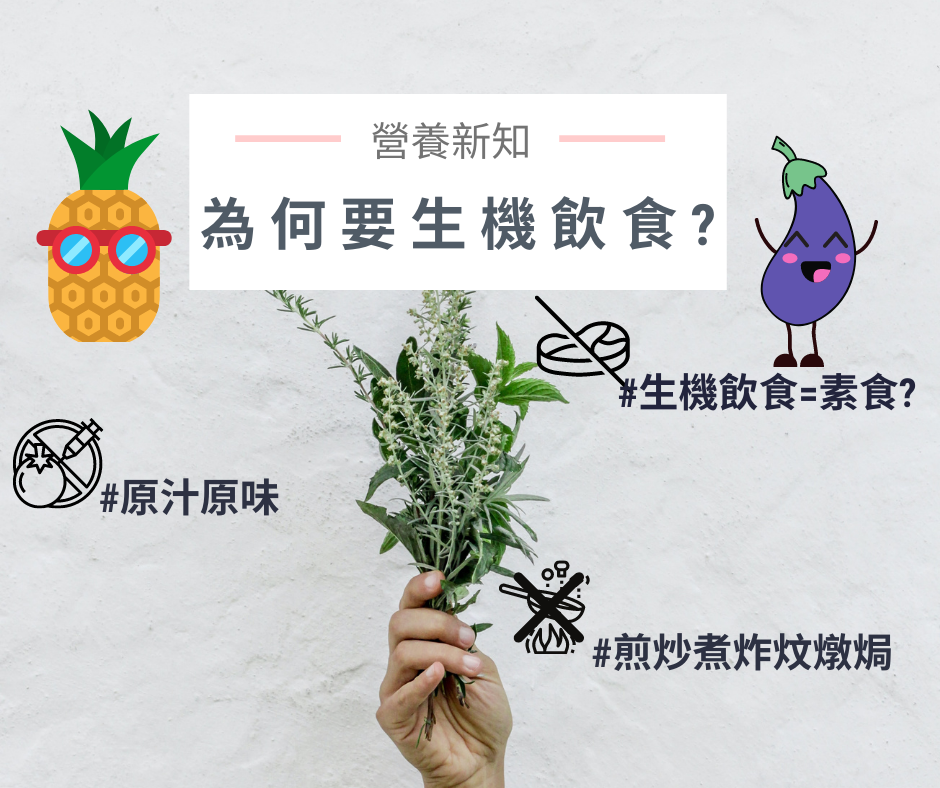
地中海飲食(Mediterranean Diet)、生酮飲食(Keto Diet)、原始人飲食(Paleo Diet)…市面上有各式各樣的飲食,用途都是幫助我們維持身體健康、降低我們患上疾病的機會。而這次我們會為大家介紹另一種的飲食—–生機飲食(Raw Food Diet)以及為何要生機飲食。
Raw Food Diet所講的Raw Food 其實是指一些未經加工、不含化學添加、不含防腐等的天然食物,絕大部份的食物在生機飲食中都是沒有經過烹煮的。而生機飲食者和素食者一樣都是不吃肉。在簡單介紹過生機飲食後,我們便回到是次文章的重點,為何要生機飲食?
烹調(Cooking)無疑為我們的食物加添了風味。樓下小炒店中式牛柳的炒洋蔥、高級餐店西式牛排的烤薯仔,光是想想已經垂涎三尺。但您們知不知道在烹煮食物的過程中,有很多營份都不知不覺地流失了?不同年份的研究都反映出煮食有機會減少人們攝取食物的養份。以水溶性維他命(Water-soluble Vitamin)為例,水煮(Boiling)的方法會令水溶性維他命溶在水中。這使人們在食用水煮食物的時候,攝取少了一些水溶性維他命。而2019日本的一份研究都指出以水煮的方式烹調蔬菜會減低胺基酸(Amino Acid)含量。看似健康的水煮竟被指出會降低養份。同時間,雖然實驗反映油炒和用微波爐煮食有助激活或增加養份,但這兩種煮法又會延伸其他的健康問題。 所以生機飲食追求的不但是素食,而且更要把自然的食物「原汁原味」地放進口內,好讓自己把食物的養份完全吸收。
其次,雖然水煮食物會降低養份含量,但煎炸炒都是眾所週知的「壞」方法。這些烹調方法的共通點都是要使用食油。而油的營養成分不外乎是脂肪。所以當人們食用煎炸炒的食物同時,除了攝取了食物自身的養份外,還把食油的一些脂肪吸收, 影響心血管健康。除此之外,油炸食物要求高溫,而食油在長時間高溫下會氧化(oil oxidation)。此化學作用會產生一些高能自由基(Free radical),破壞細胞DNA,引致癌症。
除了養份外,酵素(Enzyme)都是其中一個生機飲食的賣點。酵素可以維持我們身體健康。例如一些水果的天然消化酶(Natural Digestive Enzyme)可以幫助我們消化及腸胃健康。但有些酵素對溫度十分敏感。高溫煮食下會使這些酵素的結構改變。除著結構性的改變,它們便不會再有著幫助消化的效果。所以這亦是生機飲食的另一重點。
當然在現實上,沒有任何一種飲食是完美。生機飲食對食物的要求很高。而且不食用任何肉類。所以在營養方面如維他命B12等可能會有所缺。而長時間進行生機飲食亦有機會令體重嚴重下降,女性或會患上無月經症(Amenorrhea)。故此在進行任何一種飲食時,應該先尋求營養師的意見,看看自己的體質是否適合這飲食。否則到時因為飲食而損害了身體健康便得不償失。
Reference:
Choe, E., Min, D. B. (2007). Chemistry of Deep-Fat frying Oils. Journal of Food Science, 72(5), R77-86.
Choi, Y., Jeong, S. H., Lee, J., Lee, S., Sung, J. (2018). Effect of Different Cooking Methods on the Content of Vitamins and True Retention in Selected Vegetables. Food Sciene and Biotechnology, 27(2), 333-342.
Hoffmann, I., Koebnick, C., Leitzmann, C., Strassner, C. (1999). Consequences of a Long-Term Raw Food Diet on Body Weight and Menstruation: Results of a Questionnaire Survey. Annals of Nutrition and Metabolism, 43(2), 69-79.
Ito, H., Kikuzaki, H., Ueno, H. (2019). Effects of Cooking Methods on Free Amino Acid Content in Vegetables. Journal of Nutritional Science and Vitaminology (Tokyo), 65(3), 264-271.